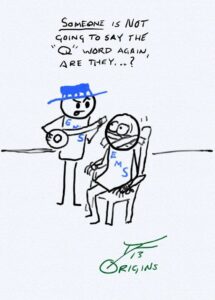
If you are new to the field, knowing what to do clinically in a situation is crucial. However, when you are not on a medical call, understanding the meaning behind some commonly used phrases, words, or abbreviations may be helpful for acclimation and conversation. The list below contains a few examples that may be helpful to know before getting your first EMT or Paramedic job. Keep in mind some of these may not be approved for PCR (Patient Care Report) writing. Check with your agency before utilizing them in your official report. If you can think of some others, please comment below so our readers are well informed before getting their first job!
BLS: Basic Life Support
ALS: Advanced Life Support
IFT: Interfacility transport
Bus, truck, medic, car: Words used to refer to the physical ambulance
CCEMT-P: Critical Care Emergency Medical Technician- Paramedic
CCP: Critical Care Paramedic
FP-C: Flight Paramedic-Certified
NREMT: National Registry of Emergency Medical Technicians
A/O: Alert and Oriented
HPI: History of Present Illness
PMH or PMHx: Past Medical History
Hx: History
Pt: Patient
BILAT: Bilateral
MCG: Micrograms (You may hear “mikes,” this means micrograms) Ex: 50 “mikes” of Fentanyl= 50 MCG of Fentanyl
TKO: To keep open (Your partner may ask you to keep the IV “TKO” or “KVO.” They mean a slow rate on the drip to keep the fluids infusing. This is typically for NS)
NS: Normal Saline
.9: Normal Saline
LR: Lactated Ringers
Prep pad: Typically means an alcohol pad to clean the skin before an IV or other intervention
4 by 4: Refers to 4×4 non-sterile gauze that most ambulances have loosely placed in a container for IV’s
Lock or Extension set: Both referring to the small piece of tubing that gets connected directly to the IV catheter to connect fluids or to just keep the IV ready just in case it is needed
Prime or spike a bag: The act of puncturing a bag of NS or LR with the appropriate drip set to clear it of air so that it can be infused
Quiet, Slow, Dead: Never use these words to describe your night so far if you want to remain on good terms with your partner.
I hope this helped clarify some of the abbreviations in EMS. And if you had to remember just one thing from this list, the “Q” word is off limits.
Until next time,
Amani
Photo retrieved from: https://www.bing.com/images/search?view=detailV2&ccid=H2%2fr5jN6&id=F8DC3BF13066F2057C0777C75A45B2B1A06C2915&thid=OIP.H2_r5jN6EYPfX5cbW1822wHaKU&mediaurl=https%3a%2f%2fs-media-cache-ak0.pinimg.com%2f736x%2f33%2f33%2f43%2f333343860270c8b3ad148d0fec88cb70.jpg&exph=960&expw=689&q=EMS+Humor+Ambulance+Cartoons&simid=607997962466756553&selectedIndex=8&ajaxhist=0